Understanding Fragrance Notes: Top, Middle, and Base Explained

A fragrance isn’t just a single smell; it’s a journey, unfolding in layers. Each reed diffuser scent is constructed with top, middle, and base notes that rise and fade over time, coming together to present a complete aromatic experience. Knowing these levels informs you about how a scent opens up and settles in your room or space, and it will make choosing the right home fragrance much easier since it fits your style perfectly.
Top Notes
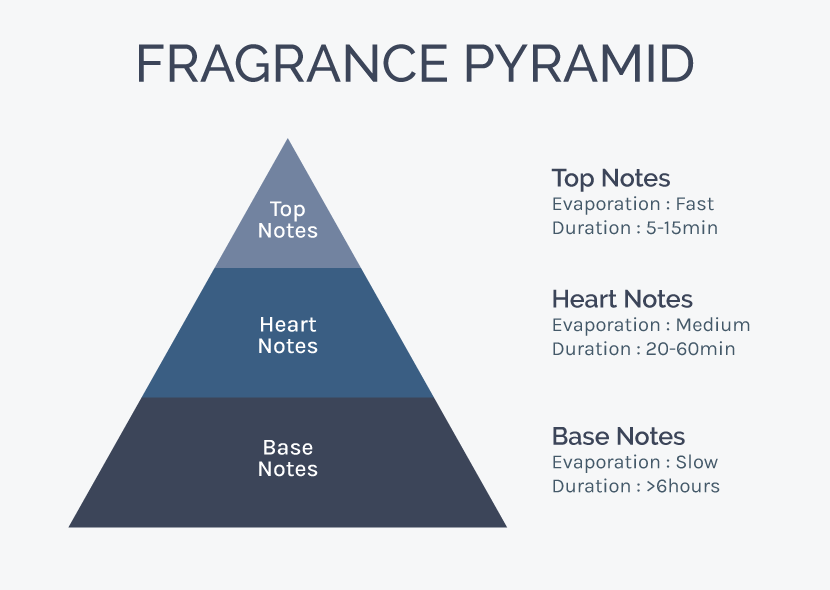
Top notes are the smells that you first perceive after placing or flipping the reeds of a diffuser. They are light, fresh, and uplifting odors that form your initial impression of a fragrance. These head notes evaporate fast – usually within 5 to 15 minutes in the air closest to the diffuser. Their impact is strong but short-lived. Top notes create an immediate “wow” factor that captures your attention. They quickly fade to make way for the heart of the scent composition.
- Characteristics: Bright, crisp, and refreshing. They draw you in with an opening burst of scent but disappear quickly.
- Examples of Top Notes: Citrus fruits like bergamot, lemon, and grapefruit; aromatic herbs such as mint or basil; light fruity notes such as apple or pear.
Middle Notes
When the top notes evaporate, middle notes, or the heart of the fragrance, appear. Middle notes are the core of the overall scent and last much longer than the top layer of the scent. In most home fragrances, middle notes can actually last around 2 to 4 hours after the diffuser starts working in a room. This layer bridges the fresh top notes and deep base notes, showing the true character of the fragrance blend. They are rounded and well-balanced. Middle notes define the theme and identify the scent.
- Characteristics: Smooth, complex, and balanced. These notes give to the fragrance its main personality and tone, often with floral or spicy accents.
- Examples of Middle Notes include floral scents such as rose, jasmine, or peony; soothing lavender; spices ranging from cinnamon to cardamom; and green or herbaceous notes including tea leaves.
Base Notes
Base notes form the last layer in a fragrance. They start to appear when the middle note slowly evaporates. They add depth, warmth, and longevity to a reed diffuser scent, especially as it continues to scent the room over time. The base note is composed of heavier, slower-evaporating molecules. They may linger in the air and on fabrics for 6 to 8 hours or even longer. These notes anchor the scent. They tend to leave a trace in the space long after their initial release.
- Characteristics: Rich, warm, and lasting. They provide a depth that is described as earthy or musk-like, and fixatives are used to prevent the fragrance from quickly evaporating.
- Examples of Base Notes: Woody notes such as sandalwood, cedarwood, or patchouli; sweet gourmand notes of vanilla or amber; musky or resinous notes, which include musk and oud.
Why is it important to know fragrance notes?

Understanding top, middle, and base notes can help you appreciate and make wiser choices in reed diffusers and other home fragrances. When you know how a fragrance unfolds over time, you won’t judge a diffuser solely by its first sniff. A scent may start with bright citrus top notes. After a few minutes, it reveals a warm floral heart. Eventually, it settles into a cozy base of vanilla or wood. Knowing this fragrance journey informs your home fragrance choices and allows you to match scents to your personal taste or special occasion.
Knowledge of fragrance notes also lets you anticipate how a reed diffuser will evolve throughout the day. If you love the long-lasting warmth of sandalwood or musk, you might choose fragrances rich in those base notes. If you enjoy a fresh start in the morning, you might prefer diffusers with bright citrus top notes. In other words, understanding the top, middle, and base notes gives you a deeper insight into the character of your reed diffuser. It also ensures that you choose a scent that you will like from the very first whiff right through to the final residual hint in your space.